
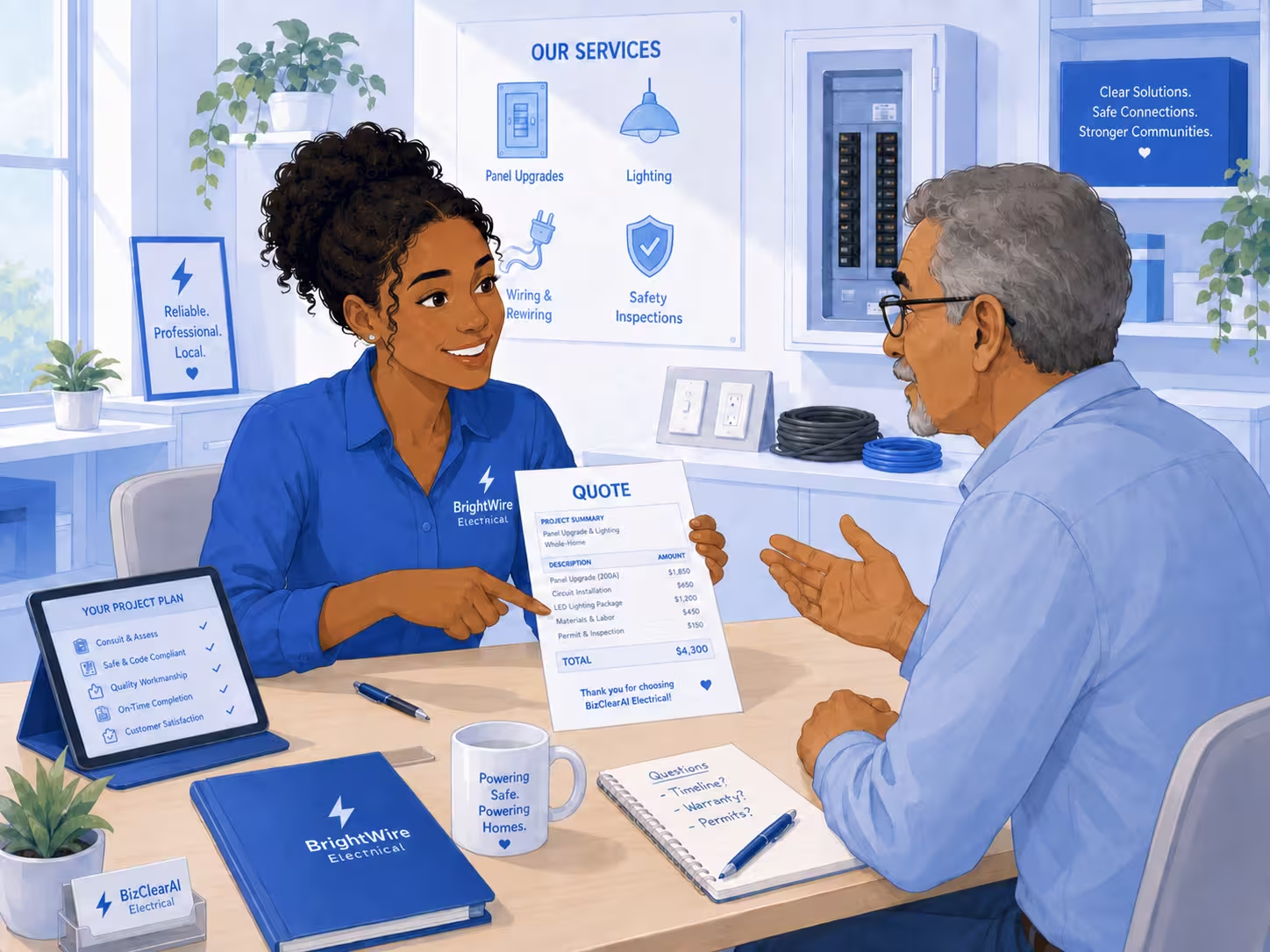
How to Close More Sales Without Sounding Pushy
Jun 30, 2026
21 min read
Want a Custom AI Consultation?
Experience how BizClearAI can transform your business with immediate, actionable insights and AI-powered consulting.
Direct Answer: How Do You Close More Sales Without Sounding Pushy?
To close more sales without sounding pushy, focus on helping the customer make a confident decision instead of pressuring them to buy. Ask good questions, confirm their problem, explain the right option clearly, handle concerns honestly, and suggest a specific next step. The best sales closes feel like guidance, not pressure.
Many small business owners think closing means using a clever line at the end of a conversation. It does not.
A strong close usually happens because the entire conversation was handled well. You understood what the customer needed. You explained the value clearly. You answered the real concern. Then you made it easy for the customer to say yes, no, or not yet.
That is the difference between being helpful and being pushy.
For a small business owner, closing more sales does not require a complicated sales system. It requires a better way to guide the conversation from interest to decision.
Why Small Business Owners Struggle to Close Sales
Most small business owners are not trained salespeople. They are plumbers, consultants, salon owners, contractors, retailers, restaurant owners, coaches, dentists, accountants, or service providers.
They are good at their work, but selling can feel uncomfortable.
Some owners worry that asking for the sale will make them sound desperate. Others assume the customer will decide on their own if they are interested. Some give a price, stop talking, and hope for the best.
That is where sales are lost.
In many small businesses, the problem is not that the owner is bad at selling. The problem is that the sales process is too passive.
The customer asks a question. The business gives information. The customer says, “Okay, I’ll think about it.” Then nothing happens.
A better close gives the customer direction.
That does not mean forcing them. It means helping them understand:
What problem they are trying to solve
What option makes the most sense
What happens next
Why waiting may or may not be a good idea
How to move forward without confusion
A good close sounds calm, clear, and confident.
What “Closing” Really Means
Closing means helping a qualified customer take the next appropriate step.
That step may be booking an appointment, approving an estimate, signing an agreement, paying a deposit, scheduling a consultation, choosing a package, or confirming a start date.
Closing does not always mean getting immediate payment. Sometimes the close is simply moving the customer to the next stage.
For example:
A plumber may close by getting the homeowner to approve the repair estimate.
A salon may close by booking the client’s next appointment before they leave.
A consultant may close by scheduling a paid strategy session.
A contractor may close by getting the customer to choose between two project scopes.
A retailer may close by helping the shopper decide which product fits their needs best.
The key is this: every sales conversation should have a clear next step.
If there is no next step, the sale usually drifts.
The Non-Pushy Sales Mindset
The best way to avoid sounding pushy is to stop thinking of closing as something you do to the customer.
Instead, think of closing as something you do with the customer.
A pushy salesperson is trying to get what they want.
A helpful salesperson is trying to help the customer make the right decision.
That shift changes the entire tone of the conversation.
Instead of saying:
“Are you ready to buy today?”
You might say:
“Based on what you told me, this option seems like the best fit. Would you like me to walk you through the next step?”
Instead of saying:
“This price is only available now.”
You might say:
“If you want this completed before the weekend, we would need to get you scheduled today. Otherwise, the next opening would likely be next week.”
Instead of saying:
“You really should move forward.”
You might say:
“From what you described, waiting could make the issue more expensive. I want to be upfront about that so you can make the best decision.”
That is not pressure. That is useful guidance.
Step 1: Start by Understanding the Customer’s Real Problem
You cannot close well if you do not understand what the customer actually cares about.
Many small business sales conversations skip this step. The customer asks for a price, and the business gives one. But price is rarely the full issue.
The customer may care about speed, trust, convenience, quality, risk, timing, reliability, appearance, safety, or avoiding future problems.
Before trying to close, ask questions that uncover the real reason they are considering buying.
Good questions include:
“What made you reach out today?”
“What problem are you trying to fix?”
“How long has this been going on?”
“What have you already tried?”
“What would a good outcome look like?”
“Is there a deadline or timing issue I should know about?”
“What matters most to you: price, speed, quality, convenience, or something else?”
These questions make the customer feel heard. They also help you recommend the right option.
Example: Plumber
A homeowner calls and asks, “How much do you charge to fix a leaking pipe?”
A weak response is:
“It depends, but our service call is $X.”
A better response is:
“I can help with that. Before I give you the best next step, where is the leak, and is it actively dripping right now?”
Now the plumber can understand urgency, explain options, and guide the customer toward scheduling.
That makes the close easier because the conversation is based on the customer’s actual situation.
Step 2: Confirm the Problem Before You Present the Solution
Before you recommend anything, summarize what you heard.
This is one of the simplest ways to build trust and increase sales.
You might say:
“So it sounds like your main concern is getting this fixed before it causes more damage, but you also want to understand the cost before committing. Is that right?”
Or:
“Just to make sure I understand, you need a simple website update that makes your business look more professional, but you do not want a long, complicated project. Correct?”
This does two things.
First, it shows the customer you listened.
Second, it gives them a chance to correct anything before you offer the solution.
When the customer says, “Yes, exactly,” the close becomes much easier.
That “yes” is not a sales trick. It is alignment.
Step 3: Recommend One Clear Next Step
One of the biggest reasons customers do not buy is confusion.
If you give too many options, too much information, or too many possible next steps, the customer may delay the decision.
Small business owners often think more detail helps. Sometimes it does. But during a close, clarity is usually more important than volume.
Instead of saying:
“We have several options, and it depends what you want to do.”
Say:
“Based on what you told me, I would recommend starting with Option B because it solves the immediate problem without adding things you do not need.”
A clear recommendation builds confidence.
The customer wants to know what you would do if you were in their position.
That does not mean hiding other options. It means guiding them.
Example: Salon
A client asks a salon owner about fixing dry, damaged hair.
A weak response is:
“We have a lot of treatments. You can look at the menu.”
A better response is:
“Based on your hair texture and the damage you described, I would start with the repair treatment and a trim. That gives you the best improvement without doing too much at once. We can book that for this week if you want to get started.”
That is a close, but it does not sound pushy.
It sounds helpful.
Step 4: Explain the Value in Plain Language
Customers do not always understand the value of what you do.
They may see only the price.
Your job is not to over-explain. Your job is to connect the price to the outcome the customer cares about.
For example:
“This option costs more because it includes the prep work, cleanup, and warranty. The cheaper version solves the immediate issue, but it may not prevent the same problem from coming back.”
Or:
“The reason I recommend the monthly package is that one session usually gives you ideas, but the monthly support helps you actually implement them.”
Or:
“This is not just the product. It includes fitting, adjustment, and support if something feels off after you use it.”
Clear value reduces hesitation.
Do not assume the customer understands why your offer is worth it. Explain it simply.
Step 5: Use Soft Closing Questions Throughout the Conversation
A soft close is a question that checks whether the customer is ready, interested, or aligned before you ask for the final decision.
Soft closes help you avoid sounding pushy because you are not jumping straight to “Do you want to buy?”
You are testing fit along the way.
Examples of soft closing questions:
“Does that sound like the kind of solution you were looking for?”
“Would that solve the main issue you called about?”
“Is this close to what you had in mind?”
“Do you feel comfortable with that approach?”
“Would it help if I explained the next step?”
“Do you want the simple option, or would you prefer the more complete fix?”
These questions give the customer room to respond.
They also show you where the customer may still have concerns.
Step 6: Handle Objections Without Getting Defensive
An objection is not always a rejection.
Sometimes it is a request for more information.
Common objections include:
“That is more than I expected.”
“I need to think about it.”
“I need to talk to my spouse.”
“I am comparing a few options.”
“I am not ready yet.”
“Can you do any better on price?”
Many business owners react to objections in one of two ways. They either back away too quickly or start defending themselves.
A better approach is to stay calm and ask a follow-up question.
If the customer says, “That is more than I expected.”
Try:
“I understand. Was there a budget range you were trying to stay within, or is the concern more about whether the value matches the price?”
This helps you understand whether the issue is affordability, value, timing, or comparison shopping.
If the customer says, “I need to think about it.”
Try:
“Of course. Just so I can be helpful, is there anything specific you are unsure about, or do you mainly need time to decide?”
This keeps the conversation open without pressure.
If the customer says, “I need to talk to my spouse.”
Try:
“That makes sense. Would it help if I sent a short summary with the recommended option, price, and next steps so you have everything in one place?”
This gives the customer a reason to continue the process.
If the customer says, “Can you do any better on price?”
Try:
“I may be able to adjust the scope, but I do not want to cut corners on the part that solves the problem. Would you like me to show you a simpler option?”
This protects your value without sounding rude.
Step 7: Ask for the Sale Clearly
At some point, you need to ask for the sale.
Many small business owners do everything right and then avoid the final ask.
They explain. They answer questions. They send information. Then they stop.
That creates uncertainty.
A clear close sounds like this:
“Would you like to move forward with this option?”
“I can get you scheduled for Thursday or Friday. Which works better?”
“Would you like me to send the agreement so we can reserve your start date?”
“Do you want to go with the standard option or the full package?”
“If this looks good, the next step is a deposit and then we can get you on the calendar.”
These are not pushy. They are direct.
Customers expect a business to explain the next step. If you never ask, you may make the customer do the work.
Step 8: Create a Follow-Up System
Many sales are not closed in the first conversation.
That is especially true for services, higher-priced purchases, home projects, consulting, and anything that requires trust.
If you do not follow up, you will lose sales that could have been won.
A good follow-up system should include:
A same-day follow-up after the conversation or estimate
A second follow-up 2–3 days later
A final helpful follow-up after about a week
A simple way to track who needs follow-up
A clear message that reminds the customer of the value and next step
According to research from sales and lead response studies, faster follow-up is often associated with better conversion, especially when customers are actively comparing options.
The key is to follow up in a way that feels useful, not annoying.
Bad follow-up:
“Just checking in.”
Better follow-up:
“Hi Sarah, just following up on the repair estimate. Based on what you described, I still recommend taking care of the leak before it causes cabinet damage. I have availability Thursday afternoon or Friday morning if you want to get it handled this week.”
That message gives context, value, and a next step.
Step 9: Make the Next Step Easy
A customer is more likely to say yes when the next step is simple.
Do not make them figure out how to move forward.
Instead of saying:
“Let me know.”
Say:
“To move forward, reply yes to this message and I’ll send the invoice for the deposit.”
Or:
“You can book here, or I can schedule it for you now.”
Or:
“The next step is a 20-minute call. I have Tuesday at 10 or Wednesday at 2.”
Or:
“If you want to approve the estimate, just reply ‘approved’ and we’ll reserve your spot.”
Small details matter.
The harder it is to buy, the easier it is for the customer to delay.
Copyable Framework: The CLEAR Sales Close
Use this simple framework to close more sales without sounding pushy.
C — Confirm the problem
“Just to make sure I understand, your main goal is __________, and the issue you want to avoid is __________. Is that right?”
L — Link the solution to the customer’s goal
“Based on that, I recommend __________ because it will help you __________.”
E — Explain the value simply
“This option includes __________, which matters because __________.”
A — Ask for the next step
“Would you like to move forward with this option?”
Or:
“The next step would be __________. Would you like me to get that started?”
R — Reduce friction
“I can send the agreement now, schedule the appointment, or hold the spot until __________.”
Copyable Sales Script for Small Business Owners
Here is a simple script you can adapt for calls, emails, text messages, or in-person conversations.
Customer: “Can you tell me more about your service?”
Business owner:
“Absolutely. Before I recommend anything, can I ask what made you reach out and what you are hoping to fix or improve?”Customer answers.
Business owner:
“Got it. So your main goal is __________, and you want to avoid __________. Is that right?”Customer confirms.
Business owner:
“Based on that, I would recommend __________. The reason is __________. It gives you __________ without adding __________ that you probably do not need right now.”Customer asks about price.
Business owner:
“The price for that option is __________. That includes __________. The main benefit is __________.”Customer hesitates.
Business owner:
“Totally understandable. Is your hesitation mainly about the price, timing, or whether this is the right option?”Customer responds.
Business owner:
“That makes sense. Based on what you told me, I still think __________ is the best fit because __________. If you want to move forward, the next step is __________. Would you like me to get that started?”
Small Business Example: Contractor
A homeowner asks a contractor for a quote on a bathroom remodel.
The contractor sends a price and waits. The customer disappears.
A better approach would be:
“Based on what you told me, your main concern is updating the bathroom without turning it into a major construction project. I recommend the mid-level remodel because it gives you the new tile, vanity, fixtures, and lighting, but avoids moving plumbing, which is where costs usually jump. If that scope looks right, the next step is a site visit so we can confirm measurements and give you a final proposal. I have Tuesday or Thursday available.”
This works because the contractor explains the recommendation, connects it to the customer’s concern, and gives a clear next step.
Small Business Example: Consultant
A business consultant talks to a small business owner who feels overwhelmed by marketing.
A weak close would be:
“Let me know if you want help.”
A better close would be:
“From what you shared, the main issue is not that you have no marketing ideas. It is that you do not have a simple plan you can follow each week. I recommend starting with the 30-day marketing plan session. You will leave with your top priorities, weekly actions, and a simple content plan. If that sounds useful, we can schedule it for next week.”
This close is not pushy because it is tied directly to the customer’s problem.
Small Business Example: Retailer
A customer in an eyeglass store is comparing frames and seems unsure.
A weak close would be:
“So, do you want them?”
A better close would be:
“Between the two, I would recommend this pair because it fits your face better, feels lighter, and will probably be more comfortable for all-day wear. The other pair looks good too, but it may slide more. Would you like me to price these with your lens options?”
That close helps the customer decide.
It is consultative, not aggressive.
Common Mistakes That Cost Small Businesses Sales
Mistake 1: Giving the price too early
If you give a price before understanding the customer’s needs, they may compare you only on cost.
Ask a few questions first so your recommendation has context.
Mistake 2: Talking too much
When owners feel nervous, they often over-explain. This can confuse the customer.
Say enough to be clear, then ask a question.
Mistake 3: Avoiding the close
Some owners never ask for the sale because they do not want to sound pushy. But customers often need direction.
A clear next step is helpful.
Mistake 4: Discounting too quickly
If a customer hesitates, do not immediately lower the price.
First, find out what the concern is. The issue may be timing, trust, clarity, or scope.
Mistake 5: Using vague follow-up
“Just checking in” is easy to ignore.
Follow up with a reason, reminder, or next step.
Mistake 6: Treating every lead the same
Some customers are ready to buy now. Others are researching. Others are not a good fit.
Your closing approach should match the customer’s stage.
How to Know When a Customer Is Ready to Close
A customer may be ready to close when they ask questions like:
“How soon can you start?”
“What is included?”
“How does payment work?”
“Do you have availability this week?”
“What happens after I approve it?”
“Can you send that over?”
“Is there a warranty?”
These questions show buying intent.
When you hear them, do not keep selling. Move toward the next step.
You can say:
“Great question. If you want to move forward, here is what happens next…”
Or:
“Yes, that is included. The next step would be to schedule your appointment. I have two openings this week.”
Do not talk the customer out of buying by over-explaining after they are ready.
What Is the Best Way to Close a Sale?
The best way to close a sale is to summarize the customer’s need, recommend the best-fit solution, explain the value clearly, and ask for a specific next step. A strong close should feel like helpful guidance, not pressure. The customer should understand what they are buying, why it matters, and what to do next.
What Should You Say When a Customer Says They Need to Think About It?
When a customer says they need to think about it, do not argue. Ask what they are unsure about so you can address the real concern. A helpful response is: “Of course. Is there anything specific you are still unsure about, or do you mainly need time to decide?”
How Do You Follow Up Without Sounding Desperate?
To follow up without sounding desperate, remind the customer why they contacted you, restate the recommended next step, and give them a simple way to move forward. Avoid vague messages like “just checking in.” Helpful follow-up should add clarity, not pressure.
How AI Can Help You Close More Sales
AI can help small business owners improve sales conversations by creating better scripts, follow-up messages, objection responses, call checklists, estimate templates, and sales process SOPs.
For example, you can use AI to:
Turn your service offer into a simple sales script
Write follow-up messages for different types of leads
Create a checklist for sales calls
Draft responses to common objections
Build a step-by-step closing process for your team
Rewrite pushy messages to sound more helpful
Create a sales SOP for new employees
The key is to make the output specific to your business.
A plumber, salon, consultant, contractor, restaurant, or retailer should not use the exact same sales script. The better your business context, the better the sales guidance.
How BizClearAI Can Help
BizClearAI can help small business owners create customized sales scripts, follow-up plans, closing checklists, customer conversation guides, and sales SOPs based on their specific business.
Instead of using a generic sales template, you can ask BizClearAI to help you build a practical plan for your services, pricing, customer questions, objections, and follow-up process.
For example, you could ask:
“Create a non-pushy sales script for my home service business that helps me close more estimates.”
Or:
“Build a follow-up system for customers who ask for a quote but do not respond.”
Or:
“Write a sales call checklist for my salon so my front desk can book more appointments.”
The goal is not to pressure customers. The goal is to make your sales process clearer, more consistent, and easier to follow.
FAQs About How to Close More Sales
How do I close more sales without being aggressive?
To close more sales without being aggressive, focus on the customer’s problem, recommend a clear solution, and ask for a specific next step. Avoid pressure tactics. Instead, explain why the option makes sense and make it easy for the customer to decide.
What should I say to close a sale?
A simple closing line is: “Based on what you told me, I recommend this option because it solves your main issue. Would you like to move forward?” This works because it connects the recommendation to the customer’s needs.
Why do customers say they need to think about it?
Customers often say they need to think about it because they are unsure about price, timing, trust, value, or whether the solution is right for them. Ask a calm follow-up question to understand the real concern.
How many times should I follow up with a sales lead?
A practical follow-up process is to follow up once the same day, again within 2–3 days, and once more about a week later. The exact timing depends on your business, but most small businesses should not stop after one message.
How do I respond when a customer says the price is too high?
Do not immediately discount. Ask whether the concern is budget, value, or scope. Then explain what is included and, if appropriate, offer a simpler option rather than cutting the price for the same work.
What is a soft close in sales?
A soft close is a low-pressure question that checks whether the customer is interested or aligned. Examples include “Does that sound like what you need?” or “Would that solve the problem you described?”
How can a small business improve its sales closing rate?
A small business can improve its sales closing rate by responding faster, asking better questions, explaining value clearly, following up consistently, handling objections calmly, and making the next step easy for the customer.
Final Takeaway
Closing more sales does not mean becoming pushy. It means becoming clearer.
When you understand the customer’s problem, recommend the right option, explain the value, and ask for the next step, you make the buying decision easier.
That is what customers want.
They do not want to be pressured. They want to feel confident they are making the right decision.
Share this post
Get Your Actionable Strategy Now
Join the many entrepreneurs using BizClearAI to scale faster and smarter.
No credit card required • Get 70 credits free every month