

How to Write a Business Plan for a Small Business with AI + Template
Apr 8, 2026
11 min read
Want a Custom AI Consultation?
Experience how BizClearAI can transform your business with immediate, actionable insights and AI-powered consulting.
Running a small business is exciting: new ideas, new customers, and the chance to build something of your own. But without a clear plan, it’s easy to waste money, lose focus, and feel overwhelmed.
That’s where a business plan comes in. A business plan is not just for banks and investors—it’s a practical tool to help you make better decisions, stay focused, and grow your business with confidence.
In this guide, you’ll learn:
What a business plan is (in simple terms)
Why every small business should have one
What to include in a strong, practical business plan
How you can use AI—and specifically BizClearAI—to create your own customized plan faster and easier
What Is a Business Plan, Really?
A business plan is a written roadmap for your business.
It explains:
What your business does
Who your customers are
How you’ll make money
What it will cost to run
How you’ll grow over time
Think of it like GPS for your business. Without it, you’re just guessing which way to go.
Your plan doesn’t have to be a big, formal document. For many small businesses, a 10–15 page clear, simple plan is enough—as long as it answers the key questions.
Why a Business Plan Is So Important for Small Businesses
Here are the main reasons a business plan is worth your time.
1. It gives you clarity and focus
A business plan forces you to answer important questions like:
Who exactly am I selling to?
Why would customers choose me over competitors?
How much do I need to charge to be profitable?
This clarity helps you:
Say no to distractions
Avoid random spending
Choose the right marketing channels
Focus on your best opportunities
2. It helps you avoid expensive mistakes
Without a plan, small businesses often:
Underestimate costs
Overestimate sales
Hire too soon (or too late)
Spend too much on marketing that doesn’t work
When you write things down, the gaps and risks become visible. The same kind of clarity also improves how effectively you use AI tools in your business, which has a direct impact on efficiency and return on investment.You can fix them on paper—before they cost you real money.
3. It makes it easier to raise money or get a loan
Banks, investors, and sometimes even landlords want to see a business plan.
They want to know:
Is this business realistic?
Does the owner understand the numbers?
Is there a clear plan to repay loans or grow the business?
A solid plan shows you’re serious and prepared.
4. It helps you make better day-to-day decisions
Your plan becomes your decision filter.
Should I add this new product? → Does it fit my target market and strategy?
Should I spend on this ad campaign? → Does it match my marketing plan?
Should I open a second location? → Do the numbers in my financial plan support it?
Instead of making emotional decisions, you make planned decisions.
5. It keeps your team aligned
If you have staff or partners, a business plan helps everyone:
Work toward the same goals
Understand priorities
See how their work fits into the big picture
When Should a Small Business Create a Business Plan?
You should create (or update) a business plan when:
You’re starting a new business
You’re launching a new product or service
You’re planning to apply for a loan or investment
Your business has changed (new market, new model, new strategy)
You feel stuck, scattered, or overwhelmed
It’s never “too late” to write a plan. Even if you’ve been running for years, a fresh plan can give you new energy and direction.
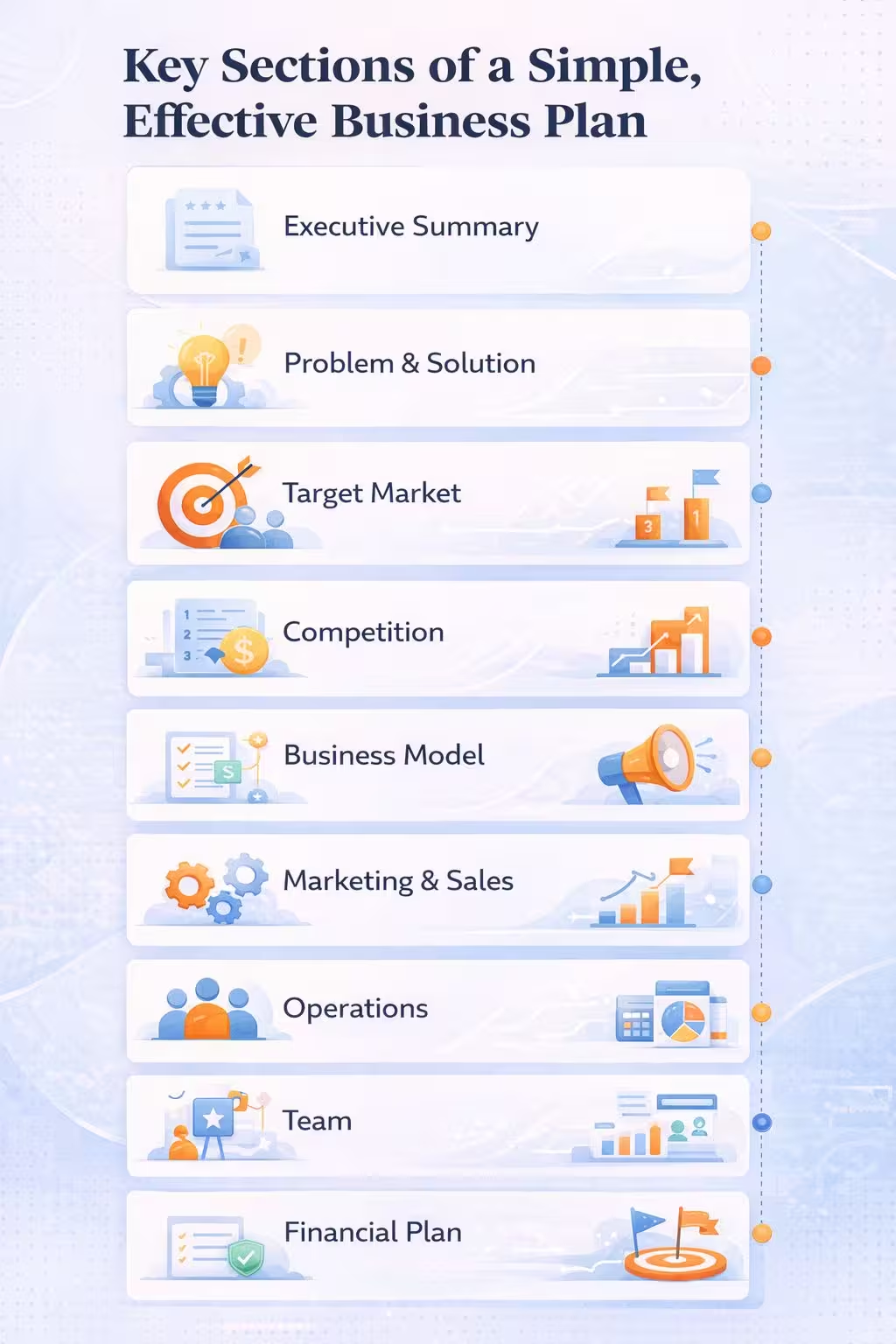
Key Sections of a Simple, Effective Business Plan
You don’t need to overcomplicate this. Here’s a straightforward structure that works for most small businesses.
1. Executive Summary
A short overview of your business:
What you do
Who you serve
Where you operate
Your main products/services
Your goals for the next 12–36 months
You usually write this part last, after you’ve done the rest.
2. Problem and Solution
Explain:
The problem your customers have
Your solution—how your product or service solves it
Example for a cleaning business:
Problem: Busy professionals don’t have time to clean, but want a tidy home.
Solution: Affordable, reliable home cleaning with online booking and flexible hours.
3. Target Market & Ideal Customer
Who are your customers? Be specific:
Age range, income level
Location
Lifestyle or industry
Main pain points
Example:
“Professional women aged 28–45 in [city], working full-time, who value a clean home but don’t have time to do it themselves.”
You can go further by defining 2–3 customer personas (sample “ideal” customers) to guide your marketing.
4. Competition and Your Unique Advantage
Who are your main competitors?
What are they doing well?
Where are the gaps or weaknesses?
How are you different or better? (your unique value proposition)
Example differences:
Faster delivery
More personal service
Special expertise
Niche focus (e.g., “vegan bakery” instead of “bakery”)
5. Business Model: How You Make Money
Explain clearly:
What you sell
Your pricing
How often customers buy (one-time vs. recurring)
Any other revenue streams
Example for a fitness studio:
Drop-in classes
Monthly memberships
Private training sessions
Online video subscriptions
6. Marketing and Sales Plan
How will customers discover you and decide to buy? Include:
Main marketing channels (social media, SEO, local ads, referrals, email, etc.)
Key messages and offers
Your sales process (inquiry → quote → follow-up → close)
Example marketing mix for a local service business:
Google Business Profile + reviews
Local SEO (website optimized for “[service] in [city]”)
Referral program
Simple monthly email newsletter
7. Operations and Delivery
How will you deliver your product or service consistently?
Location
Tools and software you use
Key suppliers or partners
Processes (e.g., onboarding a client, fulfilling an order, handling complaints)
This is where you ensure your business can run smoothly and not depend on you 24/7 forever.
8. Team and Roles
Even if it’s just you today, think ahead:
Current team (owners, staff, contractors)
Key roles and responsibilities
Future hires you may need as you grow
9. Financial Plan
This is critical—even if you don’t “love” numbers. You need:
Basic startup costs (if you’re new)
Ongoing monthly expenses
Revenue projections (conservative and realistic)
Break-even point (how much you need to sell to cover costs)
Cash flow overview (money in vs. money out over time)
For this part, AI can help you structure assumptions, but it’s wise to review numbers with a qualified accountant or financial professional.
10. Milestones, Risks, and Plan B
Key milestones (e.g., launch date, first 100 customers, first hire)
Main risks (competition, regulation, supply chain, etc.)
How you’ll reduce these risks
Backup plans for worst-case scenarios
This shows you’re realistic—not just optimistic.
How to Create Your Business Plan Step-by-Step
You don’t have to do it all at once. Here’s a simple process.
Step 1: Brain dump your ideas
Write down everything in your head about your business:
Ideas
Goals
Fears
Opportunities
Don’t worry about structure yet.
Step 2: Do basic research
Look up:
Competitors in your area/industry
Typical pricing
Customer reviews (what people love/hate about competitors)
Basic market size (local or online)
Step 3: Outline your plan
Use the sections above as a simple outline:
Executive Summary
Problem & Solution
Target Market
Competition & Advantage
Business Model
Marketing & Sales
Operations
Team
Financial Plan
Milestones & Risks
Step 4: Fill in one section at a time
Don’t aim for perfection. Aim for clear and honest. You can always improve it later.
Step 5: Build the financials
Start with:
Fixed monthly costs (rent, software, salaries, insurance)
Variable costs (materials, shipping, transaction fees, etc.)
Your pricing and estimated number of sales per month
Again, this is where an accountant or bookkeeper can really help.
Step 6: Review and simplify
Ask yourself:
Is this realistic?
Are my assumptions clear?
Could someone else read this and understand my business?
Then shorten and simplify. A clear 10-page plan beats a confusing 40-page plan.
Step 7: Use it regularly
Your plan is a living document, not a school project you file away.
Review it monthly or quarterly
Update numbers and goals as your situation changes
Use it to guide decisions on spending, hiring, and marketing
How AI (and BizClearAI) Can Help You Build Your Plan Faster
Writing a business plan from scratch can feel intimidating. This is where AI tools—like BizClearAI—can help you move faster and think clearer. Used well, these tools do more than save time—they can create measurable business value.
Here’s how you can use BizClearAI for each part of your plan:
(Many of these outputs can be created faster using a structured Prompt Library for small businesses)
1. Clarifying your idea
You can ask BizClearAI to:
Turn your rough idea into a clear business concept
Help you define your problem/solution statement
Suggest simple ways to differentiate your business
Example prompt:
I want to start a [type of business] in [location].
Here’s my rough idea: [describe in a few sentences].
Help me turn this into a clear problem/solution statement and a short business concept.
2. Understanding your target customer
BizClearAI can:
Help you define your ideal customer
Create customer personas
List common pain points and motivations
Example prompt:
I run (or plan to run) a [business type].
Help me define 2–3 ideal customer personas, including their goals, frustrations, and what they value most.
3. Analyzing competition
You can provide names/websites of local or online competitors, and BizClearAI can:
Help you compare offerings
Identify gaps and opportunities
Suggest ways you can stand out
(Always verify facts yourself, especially prices and offers, by checking competitors directly.)
4. Structuring your business model
BizClearAI can help you:
List possible revenue streams
Review pricing options
Think through subscription vs. one-time models
Example prompt:
Here’s my business idea: [describe].
Suggest 3–5 possible revenue streams and pros/cons of each for a small business like mine.
5. Creating your marketing and sales plan
AI is very strong here. BizClearAI can:
Suggest marketing channels that fit your business type and budget
Draft sample social posts, email campaigns, or ad copy
Outline a simple sales process
Example prompt:
I sell [product/service] to [target audience] in [location/online].
My budget is [$X] per month.
Create a simple 3-month marketing plan with channels, example messages, and basic content ideas.
6. Drafting your operations and processes
BizClearAI can help you map out:
Step-by-step workflows (e.g., onboarding a client, fulfilling orders)
Checklists and SOPs (standard operating procedures)
Basic policies (refunds, communication, service standards)
For many small businesses, this kind of structured AI support can also reduce the need to outsource early-stage planning and admin work.
7. Supporting your financial planning
While AI can’t replace a real accountant, BizClearAI can help you:
List typical cost categories for your industry
Think through pricing logic (cost + margin)
Draft simple financial assumptions to discuss with a professional
Example prompt:
I run (or plan) a [type of business] in [location].
List common startup costs, typical ongoing monthly expenses, and key numbers I should estimate before seeing an accountant.
8. Turning all of this into a polished plan
Once you’ve worked through each piece with BizClearAI, you can ask it to:
Combine everything into a structured business plan
Improve clarity, flow, and formatting
Create a shorter “summary version” for banks or partners
Example prompt:
Using the information we’ve developed about my business,
create a structured business plan with headings and short paragraphs
that I can edit and use for my small business.
From there, you simply:
Edit anything that’s off or too generic
Add your real numbers and data
Review with a trusted advisor or professional
Final Thoughts: Your Business Deserves a Plan
A business plan is not just “paperwork.” It’s your:
Roadmap
Decision guide
Financial safety tool
Communication tool for lenders, partners, and your team
With AI tools like BizClearAI, you don’t have to start from a blank page or figure it all out alone. You can move faster, think clearer, and build a plan that actually helps you run and grow your business day to day.
In some cases, that also means handling work in-house that many businesses used to outsource.
You bring the vision and the real-world knowledge of your customers.
AI helps you organize it, challenge it, and turn it into a practical roadmap.
Below is a simple, fill-in-the-blanks business plan template as provided by BizClearAI. Create your own customized business plan using BizClearAI.
Share this post
Get Your Actionable Strategy Now
Join the many entrepreneurs using BizClearAI to scale faster and smarter.
No credit card required • Get 70 credits free every month